Monastic Garden Design
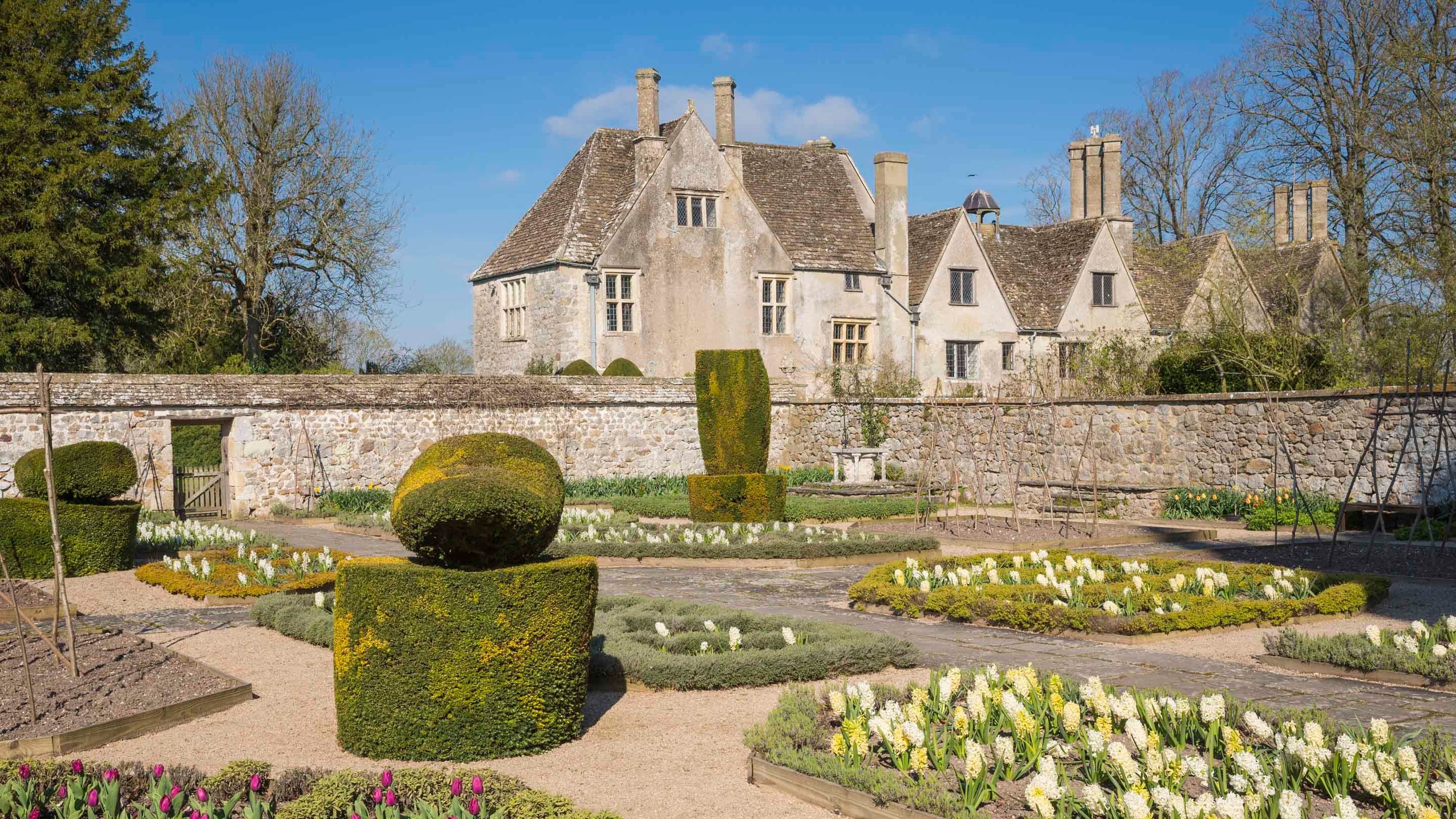
The Monasteries in Europe up until the year 1500 build extensive gardens that were as self-sufficient as possible. The Benedictine monasteries for example, had extensive gardens that could supply sustenence for the entire community. These were walled gardens that kept nature separate. Gardens were practical, and nature was not. The Monks cloister's often had four paths, and four squares representative of the four rivers of Jerusalem. Monks had a vegetarian diet for the most part, and the gardens tended to contain high starch vegetables, herbs and garlic for medicinal purposes.
Fountains
In these biblical grounds, monks and nuns would use water to represent the Holy Trinity; the three states of water 1. Still 2. Moving 3. Sparkling.
Labrynths
Labrynths were built for enjoyment, as a maze, a symbol and way to guide visitors through a walk in the garden. The figures would be circular or in the shape of a hexagon. The first in England was said to be by Henry II.