18th Century German Garden Design
Scloss Augustusburg
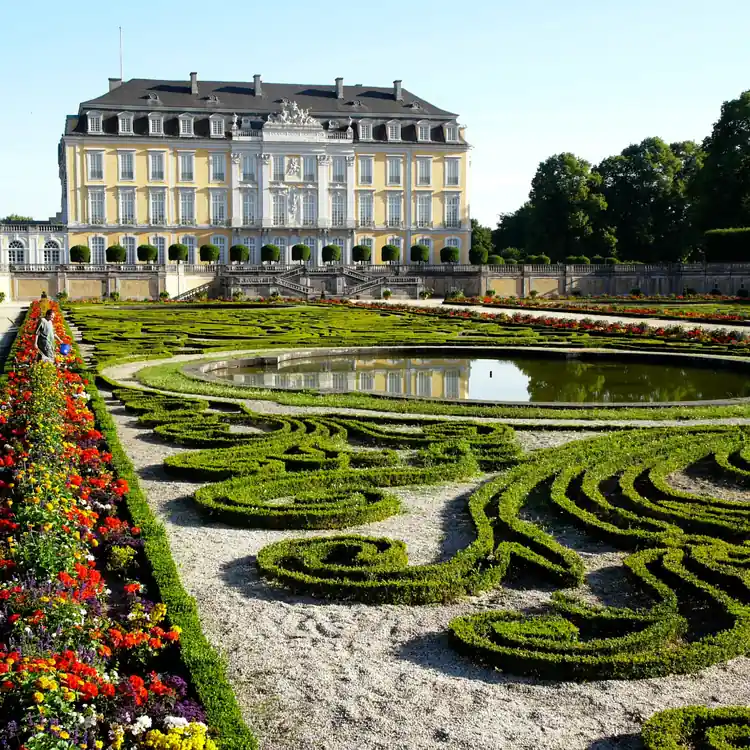
This Unesco World Heritage site is an idyllic 18th century Rococo architecture landscape. In 1725, Clemens Augustus of Bavaria set the standard when building this residence, along with the Falkenlust hunting lodge on the estate. Domique Girard (1680-1738) designed the symmetrical flowerbeds, and many multiplying ramps. On the garden's south side lays the embriodery parterres, with fountains and mirrored pools and cascading water structures all originating from a circular basin with an outstanding water fountain. A semi-circle park joins the gardens and is lined with a wall.
Schloss Nymphenburg
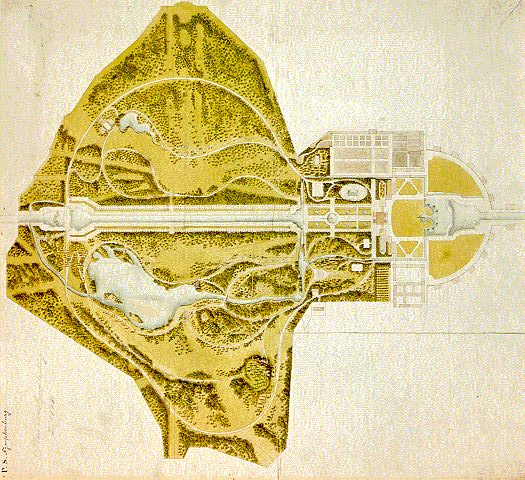
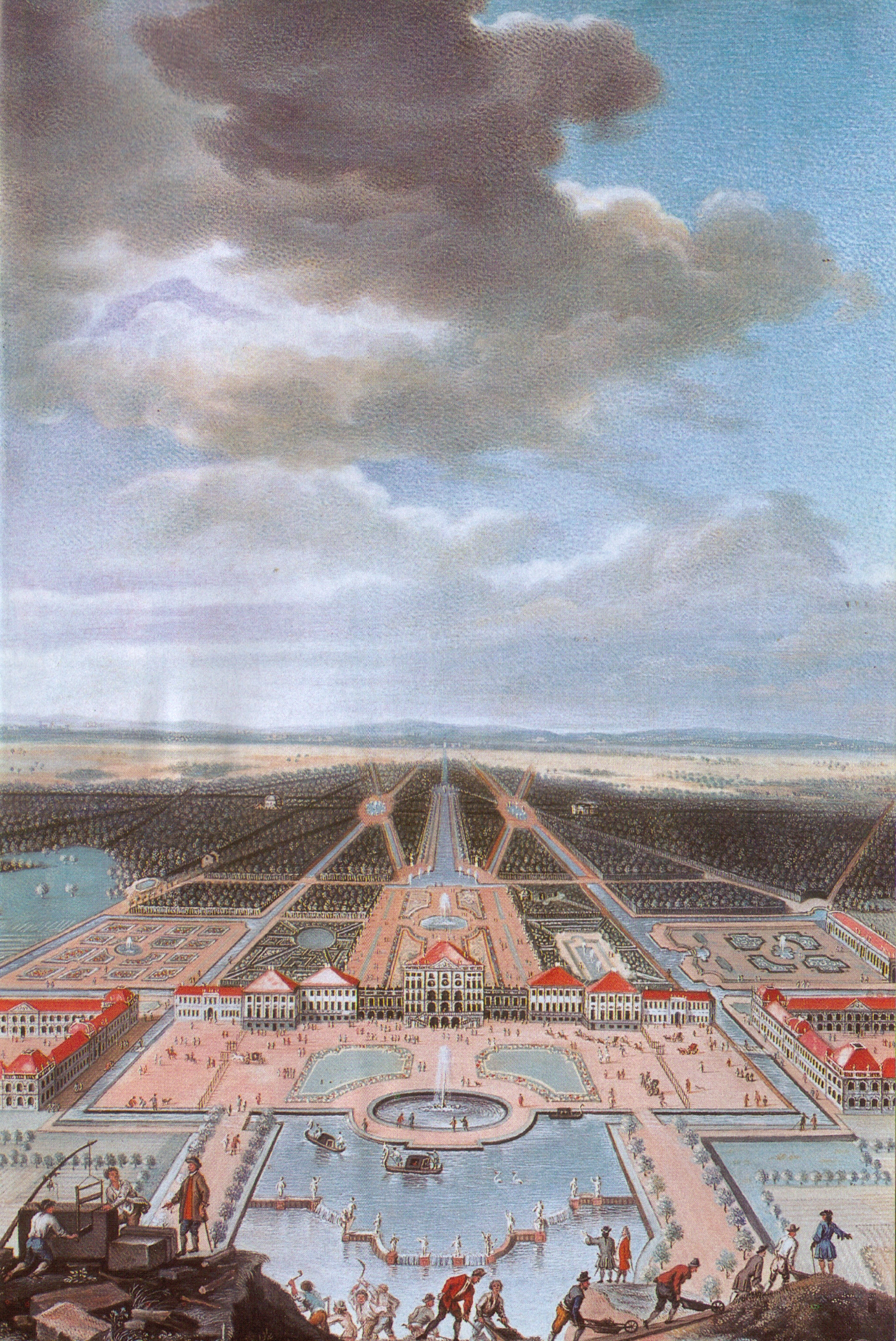
Inspiration for the Baroque gardens are largely based on Vaux-le-Vicomte and Versailles, occupying 444 acres of the total 565 acres. The Formal English country park remains a spectacle in itself. The east park joins the palace buildings, the Grand Circle (Schlossrondell) and a Botanical Garden. The Central Canal divides the property by the north and south sections. The West Parterre gardens have large rectangular segments are surrounded with canals. The French Garden has a 2.5 km canal that is fed by the tributary, Wurm River, ending at the Great Cascade. Rows of trees and arcades are planted dividing the park.
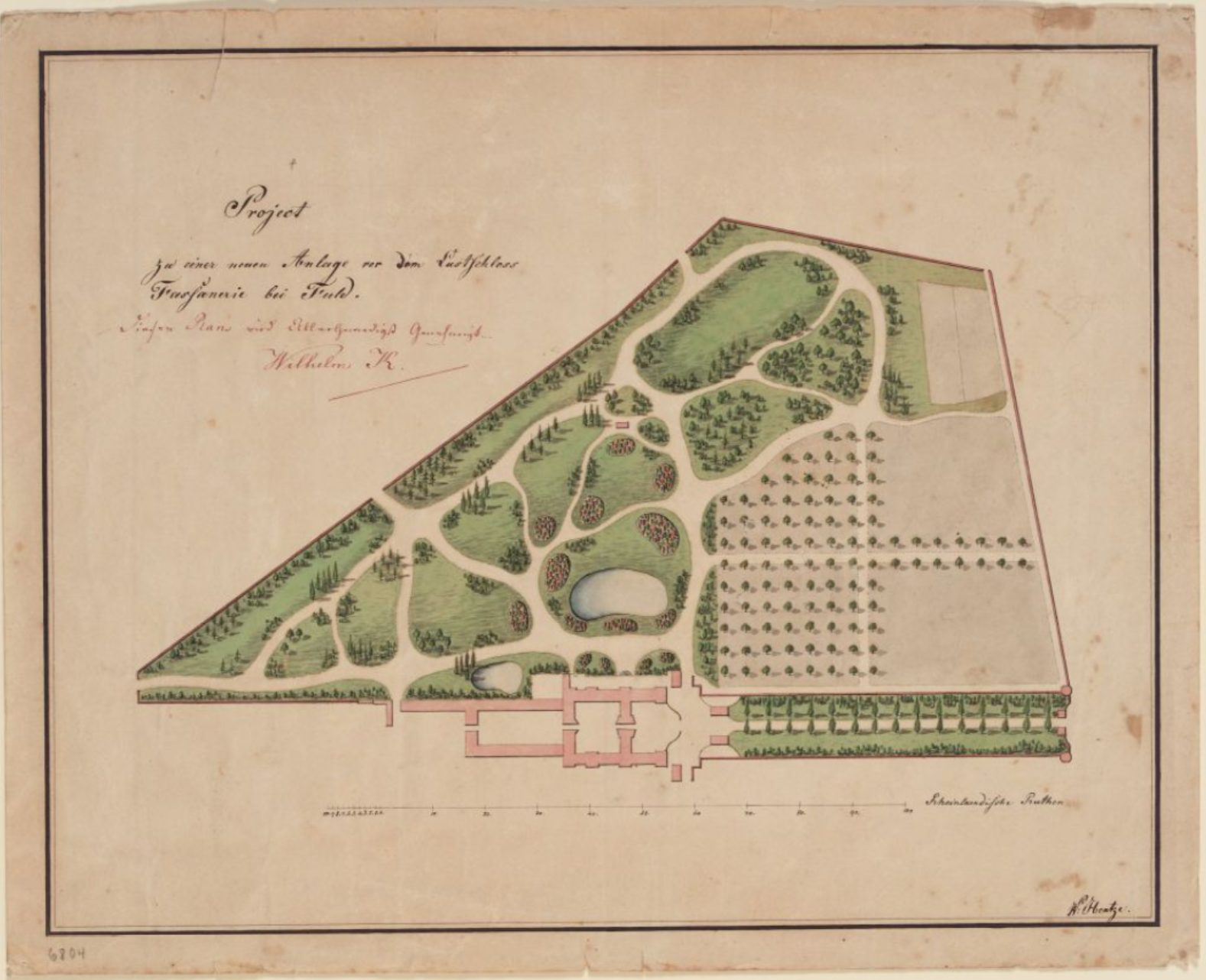
Fasanerie
Baroque Park style gardens, with serpentine paths, English landscaping and a Japanese teahouse. The property consists of a variety of tree species, including a section dedicated to Carl Linnaeus.
Wurzburg
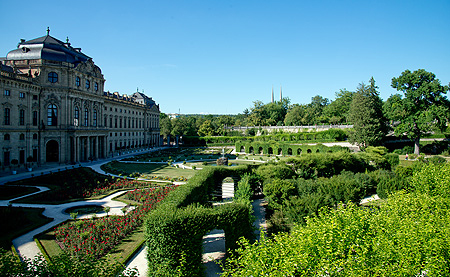
The Gardens are known as "Hofgarten", with a very formal, Baroque style near the structure. As it extends outwards it transforms to a English style , romantic meadow. Originating in 1759, this has become a UNESCO World Heeritage Site. There are two monuments of greek mythology, vases, an Orangery, three gates leading to the Court Gardens, and a Pavillion.
Stuttgart
Karlsruhe
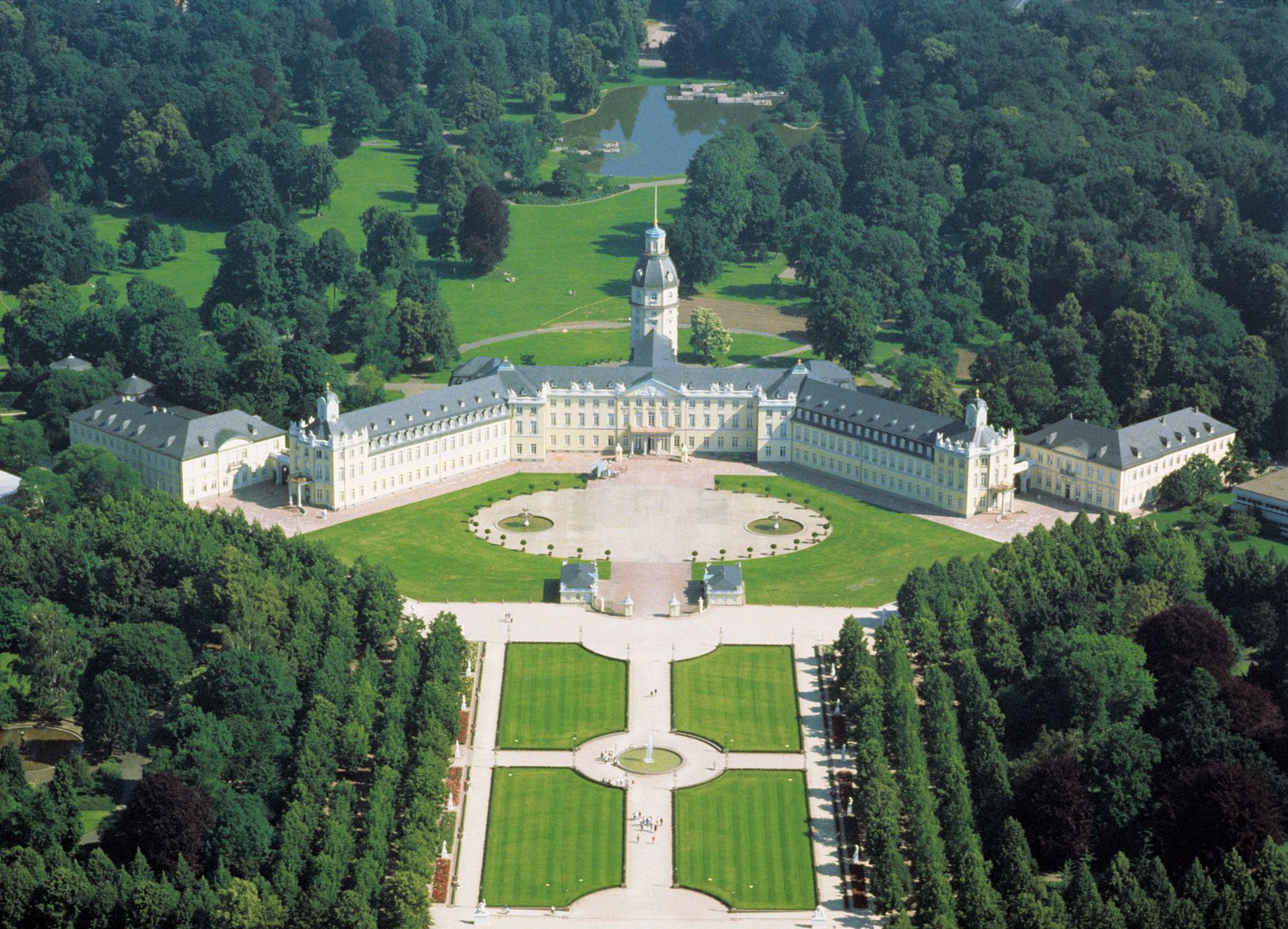
The Sclossgarten was constructed in 1715 by Margrave Karl Wilhelm. The Baroque garden was planted with tulips and traditional English landscaping, along with an Orangery and a Chinese garden. A botanical garden was added in 1808 and for the 300th anniversary a wooden pavilion was constructed in 2015. The palace property is unique in that it is circular in shape, and the entire property radiates outward from the central structure, surrounded by lakes, and evergreen forests.
Friedenstein
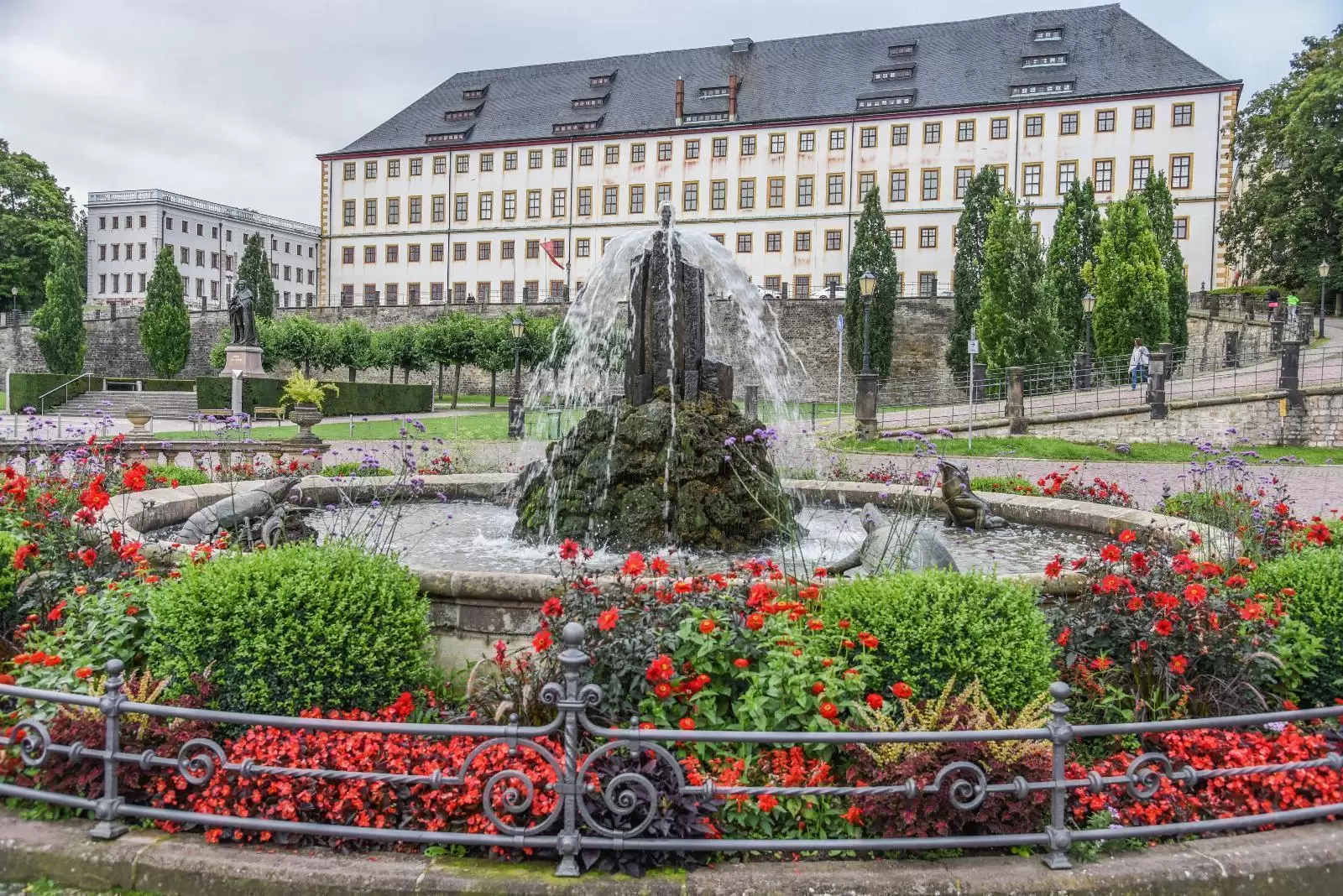
The Baroque Gardens were added in 1708 and consisted of decorative flowers, topiary and hedges centered around a water fountain, all bordered by rows and trees. A courtyard is layed out from east-west called the Ehrenhof.
Ludwigsburg
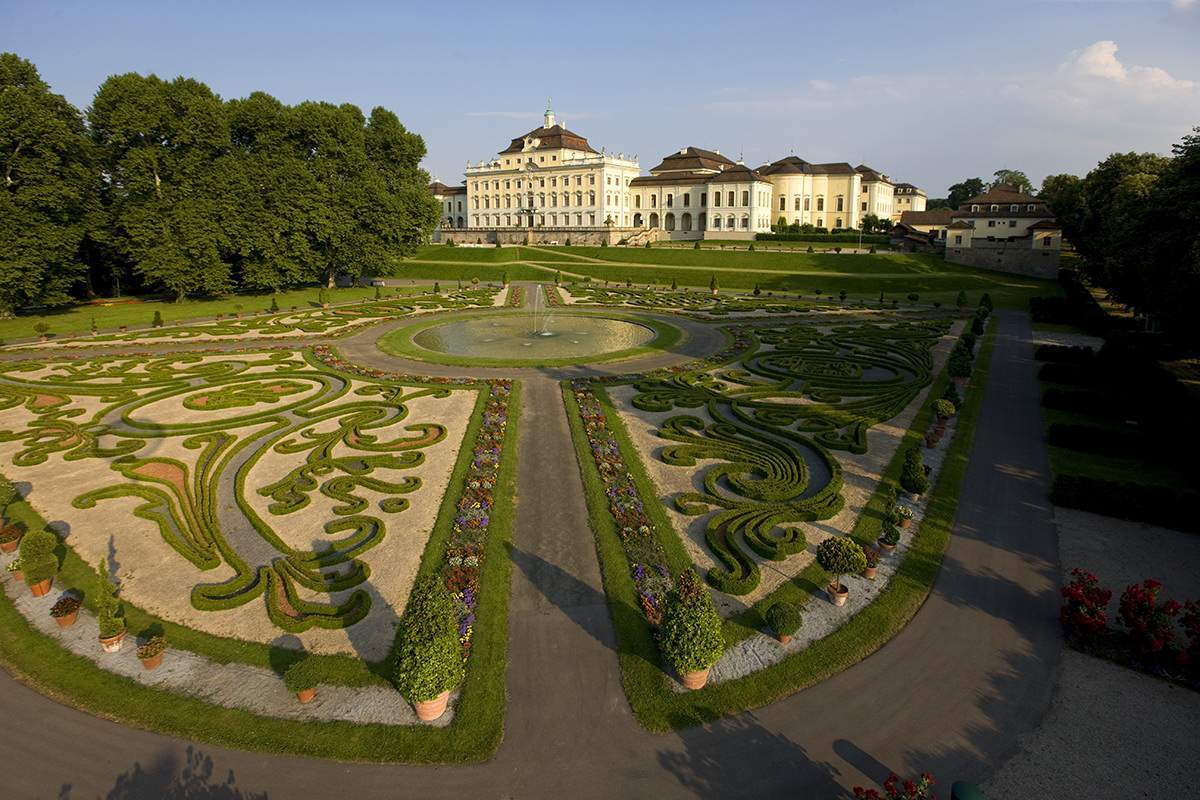
Work on the East and South gardens were carried out throughout the 1750-1800's where a Broderie, or partterre was added replacing the italian terraces. It later became a Neoclassical styled, Mediterranean theme. It was separated into four equal lawns with paths throughout, an expansion was added eastward in English style. Finally, a medieval themed garden was added to the East Side of the estate along with two other adjacent gardens: a Fairy Tale garden and a folly. Since, the gardens have been restored with 22,000 roses and thousands more flowers in the mid 20th century.
Anholt
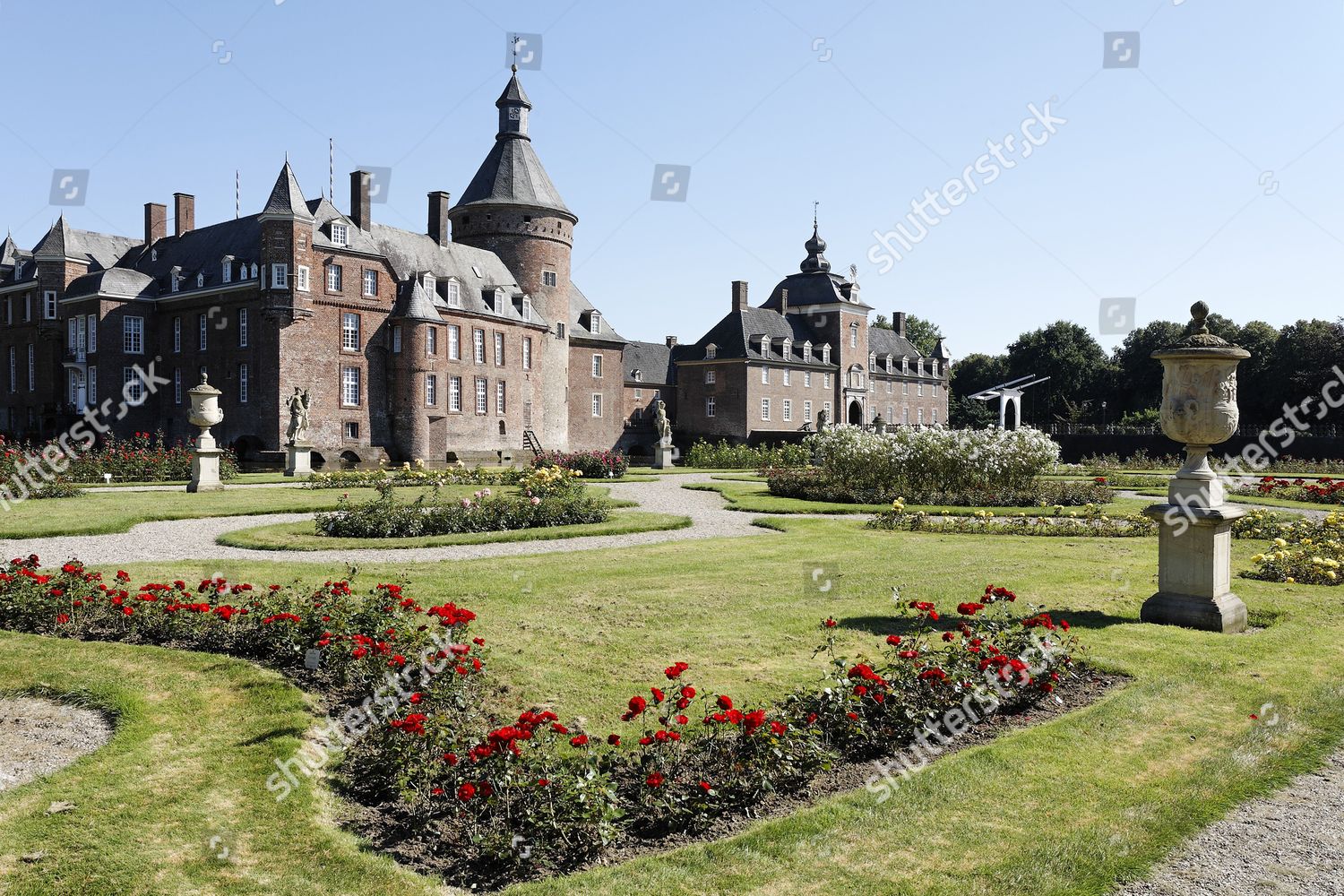
Known as the Moat Castle, the gardens are surrounded by water. The parterres and intricately designed, with flower beds of roses, and statues surrounding the grounds.
Poppelsdorf

Poppeldorf Palace's orangery and gardens began as early as 1650. The Baroque park was built in 1715 in the French style, with exotic trees and shrubs. Today's Botanical gardens reflect this period. In 1819, the garden was transformed to an English landscape garden.
Nordkirchen
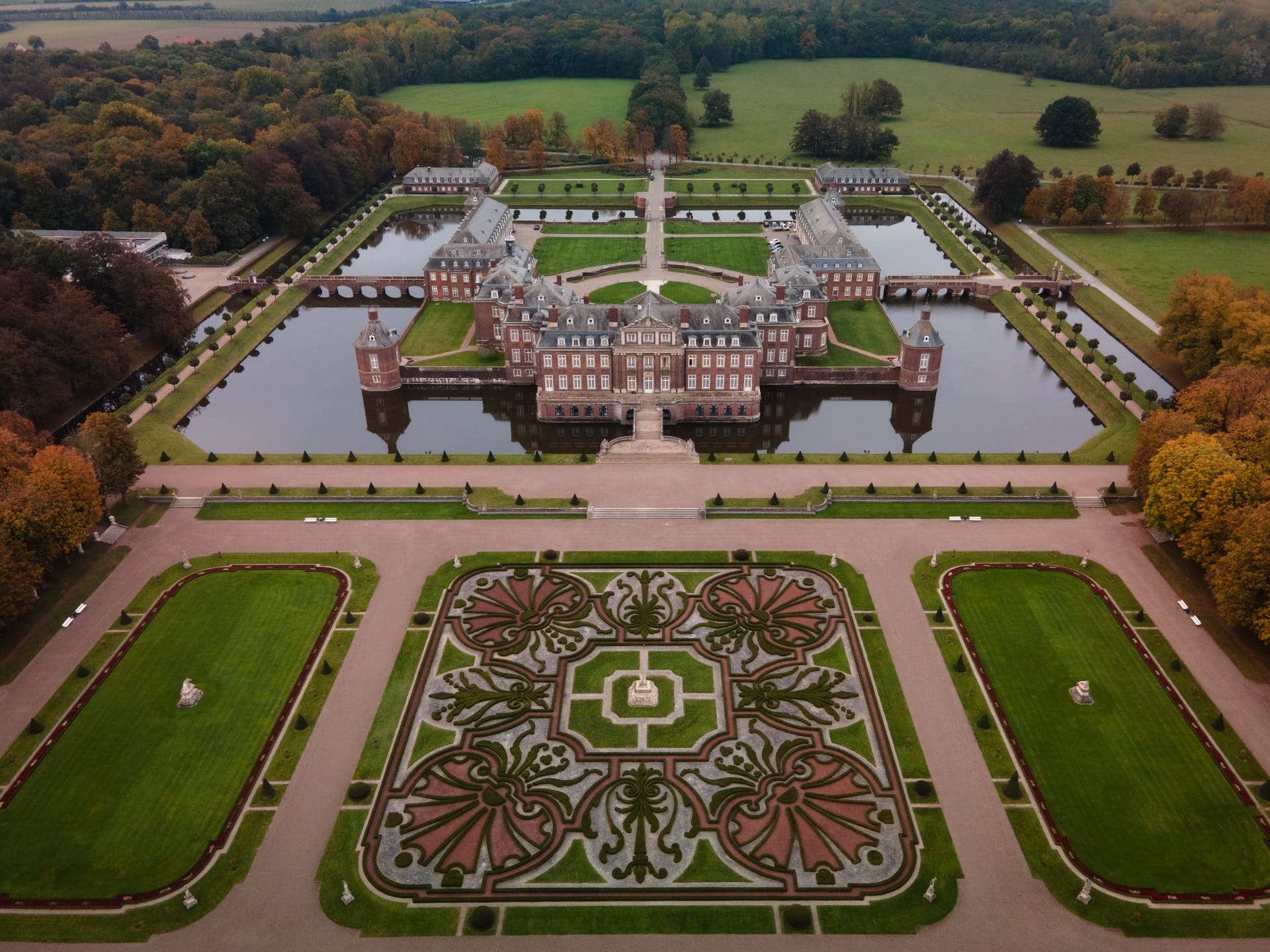
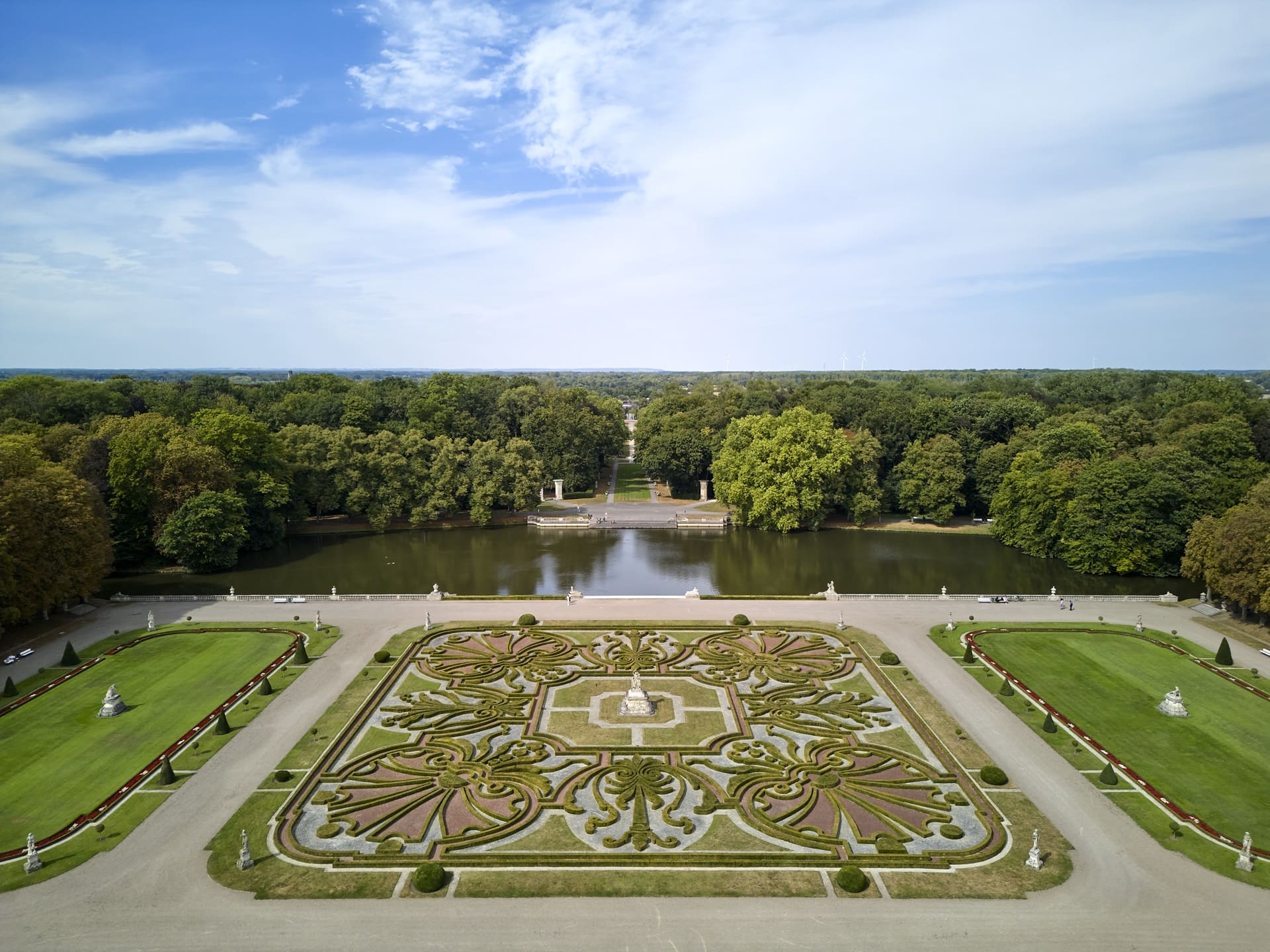
The Schloss was built between 1703 and 1734, in Westphalia, Germany. It is surrounded by woodlands and a moat around the estate. The Baroque style gardems are equipped with parterres and a formal scrolling broderie. There are multiple lifesize mamble statues, and a pavillion on each corner.
Hohenheim
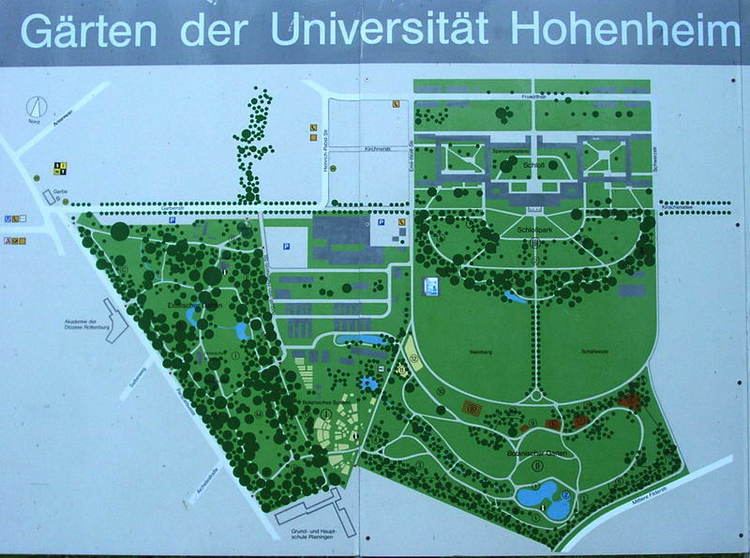
Over 30 hectares of parkland are part of the Hohenheim Palace Park. There are two State Arboretum's, one Exotic and one Landscape Garden with the first originating in 1776, and the ladder in 1998. There are over 60 scenes of monuments, and sculptures of ruins of antiquity as well as Baroque representations of times past. The Botanic gardens are over a century in age, originating in 1901, and an addition was added in 1974 of "History of Vegetation and Medicinal Plant Gardens". The Collection Greenhouse has over 1000 different plants
Arolsen

Originating in 1131, the estate became a noble residence in 1655, and was replaced in the beginning of the 18th century as a Baroque structure. The paths are lines with small hedges, and has a romantic influence with Wildflowers, Willows, Alders and a castle pond referred to as 'Arocker Spazierweg'. The Great Avenue is tree lined with Oaks, and extends 1.6 km in length.