18th Century England Garden Design
18th Century England grew tired of the structure of parterre's and geometric patterns, so here began the re-introduction of wilder growing of natural scenes. These incorporate big lawns, planned with dug-out lakes, evergreen framing, and spontaneous sculptures, that avoided symmetry. This period strayed away of rigid control, and was enlightened to more of romanticized authenticity.
Kensington
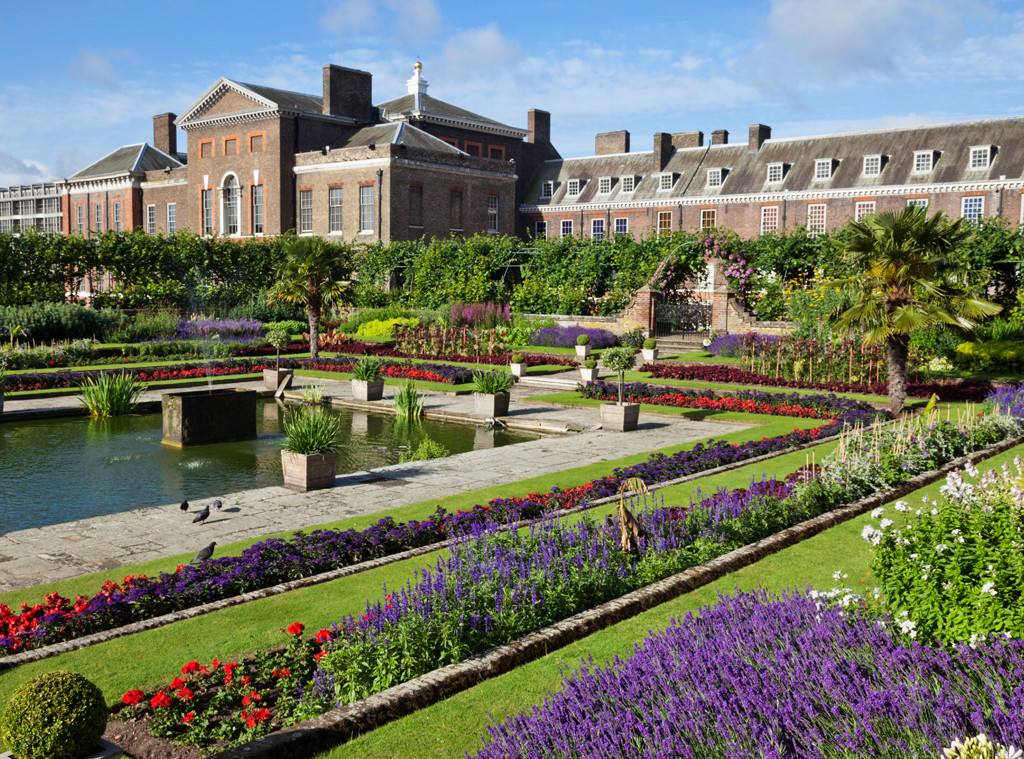
The Palace was established in 1689 by William III and Mary II, with the garden being designed in the Dutch style, with box hedges and flower beds. Queen Anne redesigned the garden in Enlgish Style in 1702, with an Orangery in 1704, with citrus trees in the eloborate greenhouse. In 1728, Queen Caroline transformed the 242 acres of Kensington Gardens as the current park. Serpentine ponds, the Long Water and a Board Walk.
The Sunken Garden
In 1908 the Sunken garden was designed in Formal Edwardian Style. This incorporated natural materials, herbaceous landscaping on terraces and included water features.Cradle Walk
Tilia Platyphyllus branches are draped as arches creating a walkway surrounding the Sunken Garden.The Wildflower Meadow
South East of the palace is a wildflower meadow, with poppies, campion, daisies, and many other flowers.Claremont
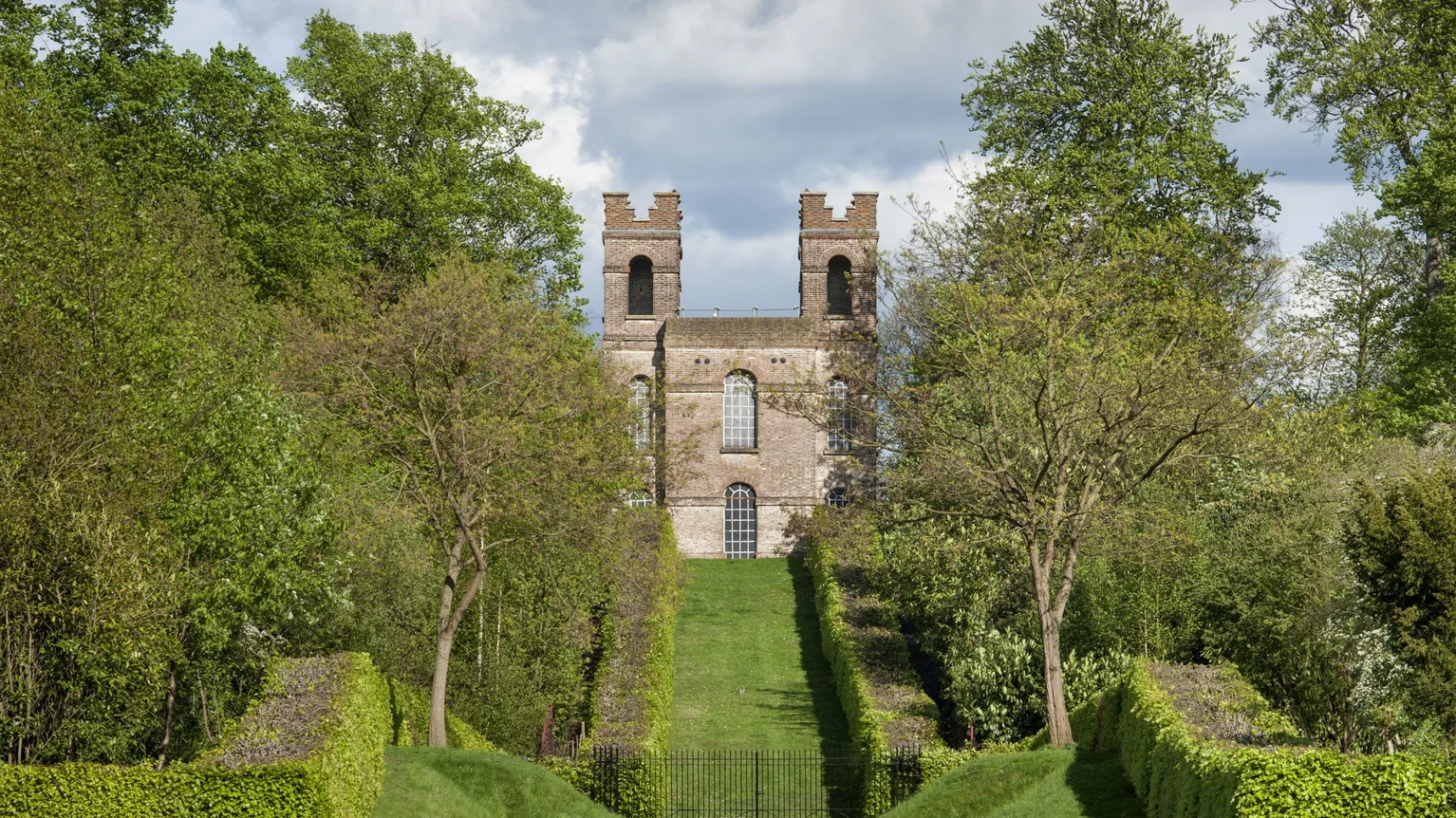 In the heart of Surrey, and listed as a Grade 1 garden. The estate was acquired by Queen Victoria in 1866. It consists of a large grass amphitheatre, serpentine lake, grotto, Camellia Terrace and Belvedere Tower. Capability Brown, Charles Bridgeman, Sir John Vanbrugh and William Kent all played a role in creating one of the largest pleasure grounds of its kind in Europe.
Strawberry Hill
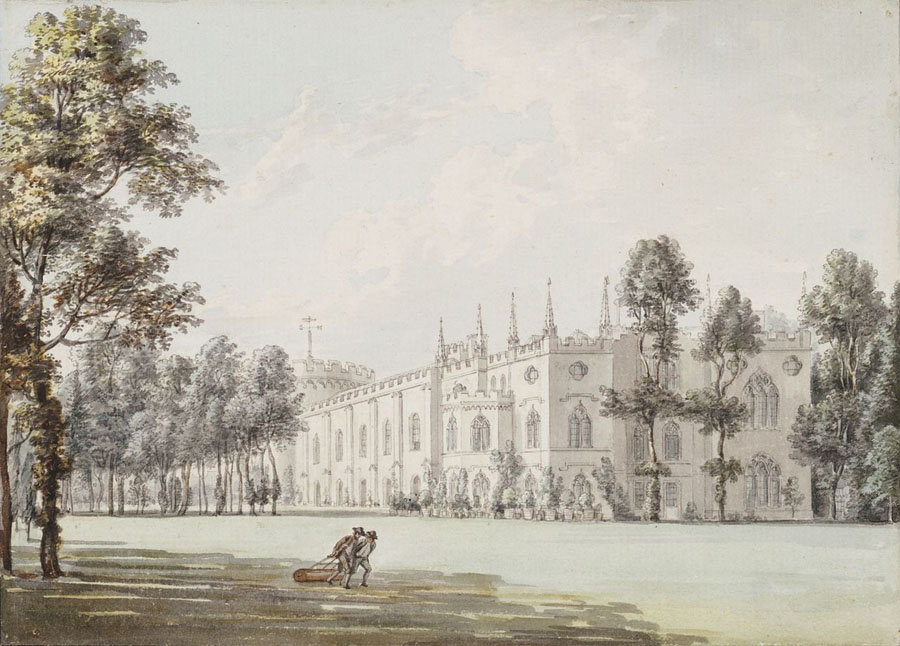 The garden at Strawberry Hill was created in 1747, which began as five acres and grew to 35 acres. It is listed as a Grade 2, and extensive refining has taken place since 2010. There once was a signature view of the River Thames, and the restorations have begun. This romantic garden is mixed with trees and shrubs, with crossing winding paths, open terraces and meadows.
Windsor
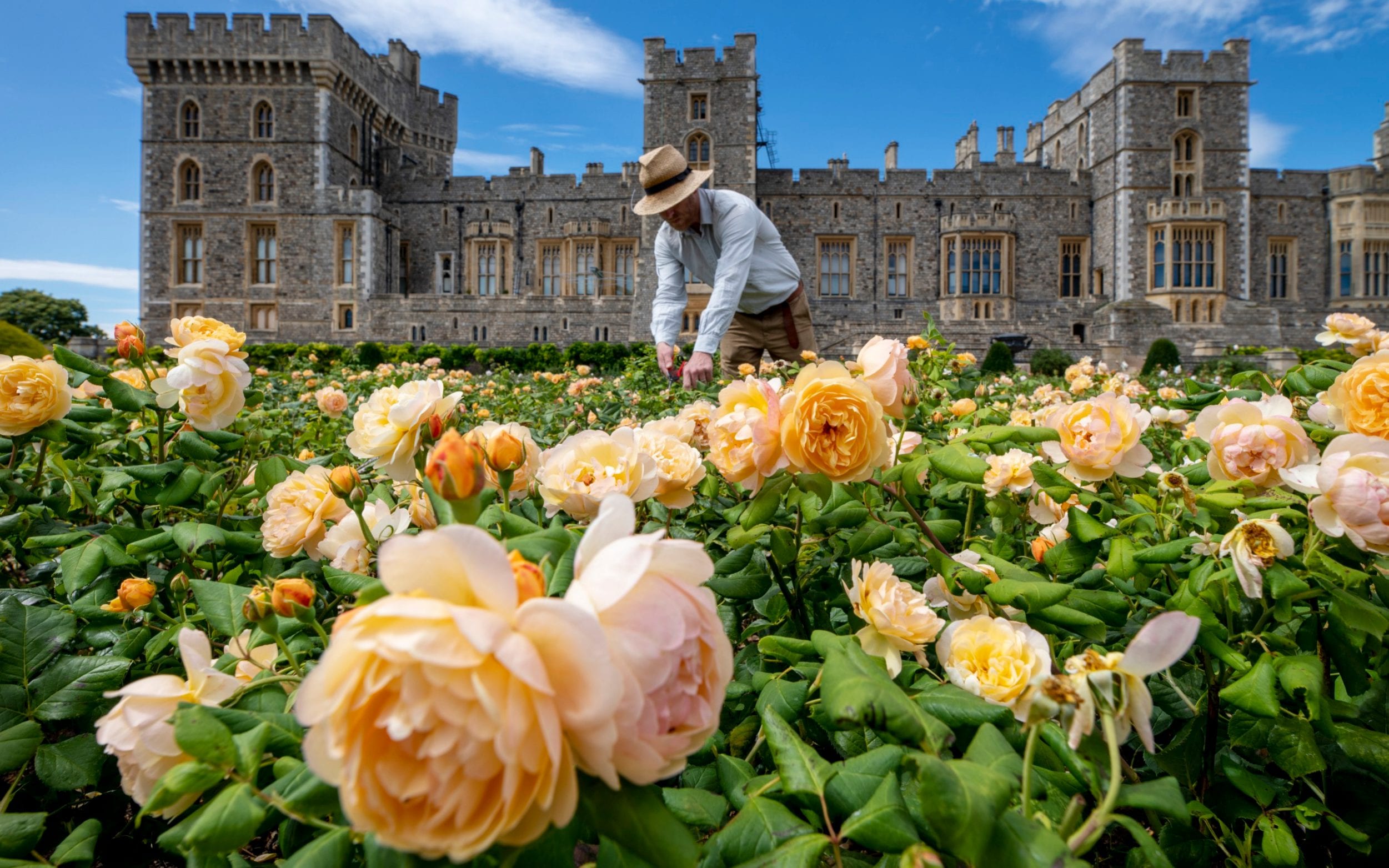 Windsor Castle has records that date back a thousand years, and the first account of the King's garden were in the 12th century. It wasn't until 1702, when William the III's reign laid out a formal garden. Trees, a parterre and a canal added during the rule of Queen Anne and was known as the Maestricht Garden. In the early 19th century, Queen Victoria established the Royal Gardens in the Home Park.
Stourhead
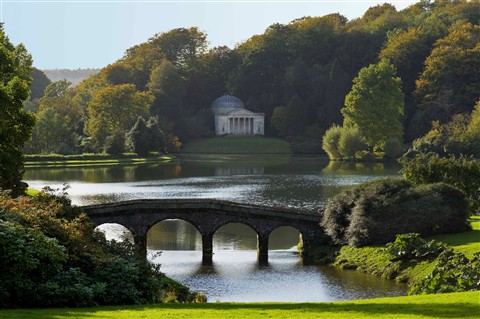 Stourhead is a 2560 acre Estate in the Southwest English county of Wiltshire. A Grade 1 listed 18th century Neo-Palladin mansion, with English Landscape garden style. The Utopian-type Italian lanscape was created by making an artificial lake, and planting gardens in a manor that would evoke different moods. The temples are well known, as they're inspred by scenes of the Grand Tour of Europe; King Alfred's Tower and the Temple of Apollo. The Bristol High Cross is of medieval origin, and transported from Bristol. The Pantheon is a monument designed by Flitcroft, and is thought to be the most important visual feature of the gardens.
Stowe
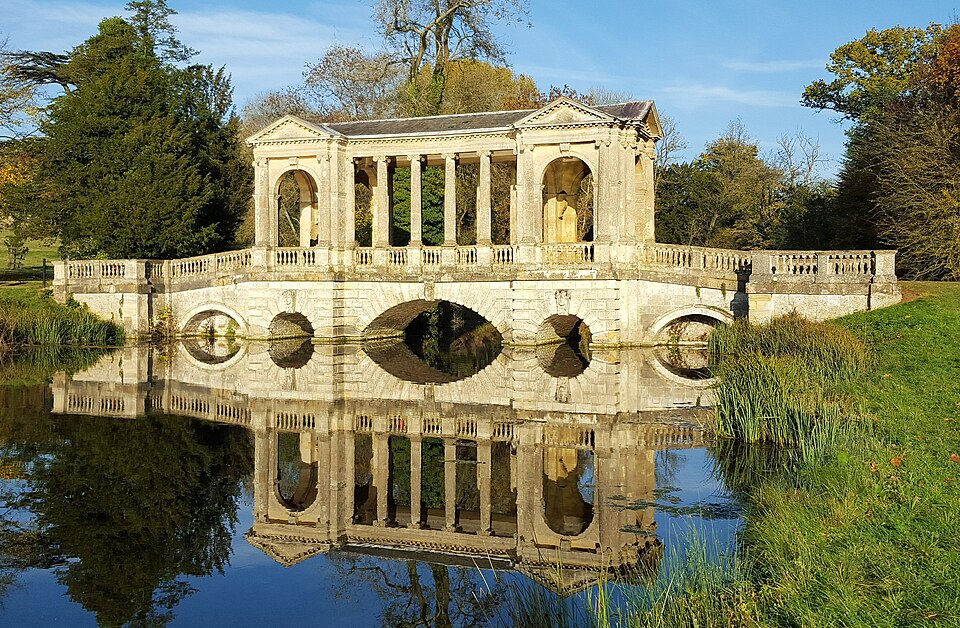 The Stowe Manor and estate was established by John Temple in 1589, in Buckinghamshire. The gardens were developed in the 18th century as the most significant example of the English Landscape Design. This Grade 1 listed park has gardens changed from a Baroque park to a natural landscape garden, with the additions of a Corinthian Arch, Temple of Venus, the Temple of Ancient Virtue, the Temple of British Worthies, the Temple of Concord and Victory, the Queen's Temple, Doric Arch, the Oxford Bridge, and the Palladin Bridge. The Elysian fields were laid out following the natural lines and contours. There is a Octagon Lake and an Eleven Acre Lake, a Grecian Valley, a South Vista and a mile and half Grand Avenue.
Blenheim Palace

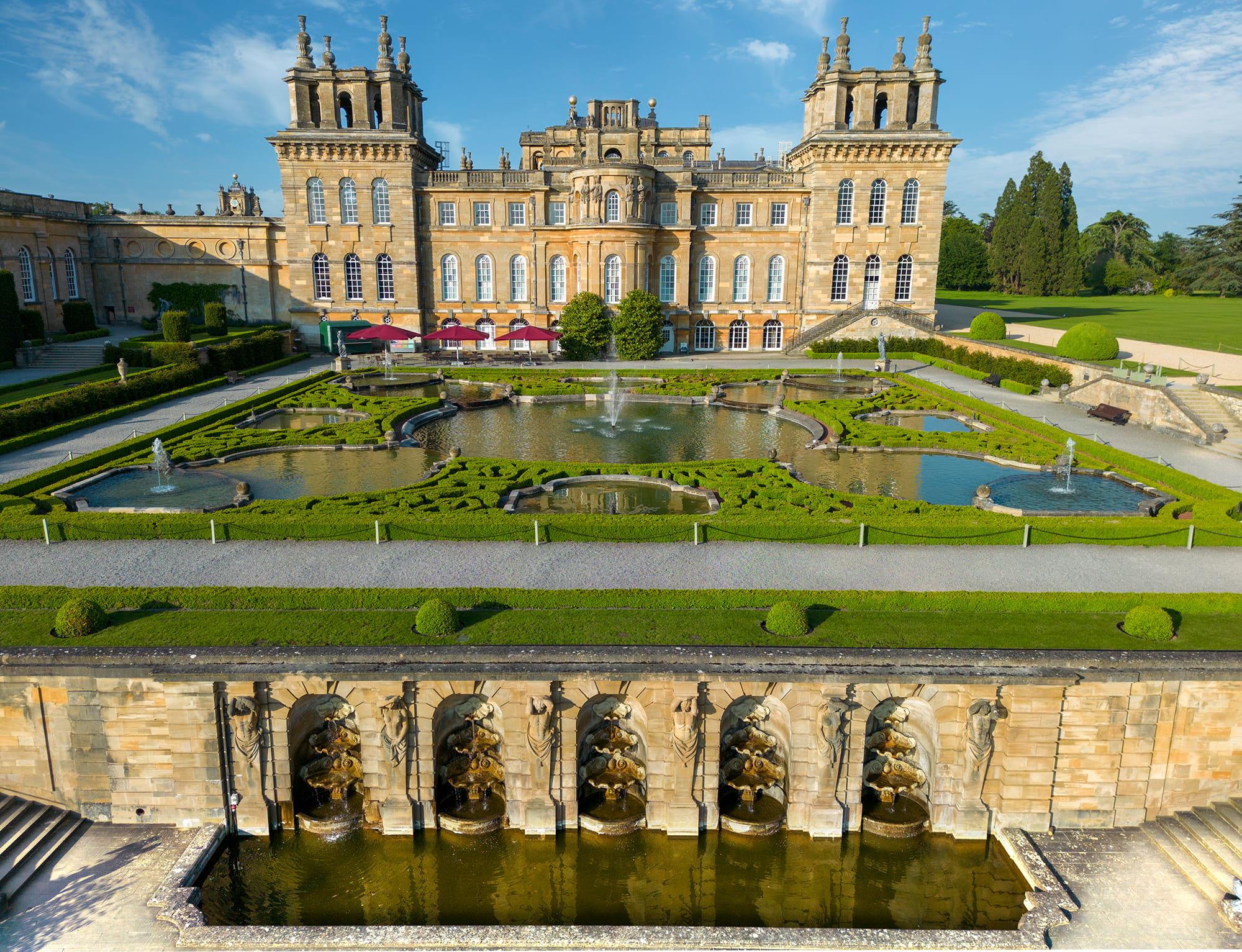
The Castle was built in 1705-1722, with over 2,000 acreas of parkland, 90 acres of formal garden and is listed as a Grade 1 site and UNESCO World Heritage Site. It is a classic example of the English Landscape garden. Capability Brown was responsible for designing the garden scheme. A manmade lake with Vanbrugh's Grand Bridge. The formal Italian Gardens have meticulously trimmed Golden Yew hedges. The Rose Gardens display eight varieties of roses and bushes with climbing trellises. There are Water Terraces and a Secret Garden. It is thought to be 'The Finest View in England'.
Croome, Worcestershire
Croome is designed with inspiring styles of the Georgian Era, with statues, temples and a serpentine lake. The architects from the period; Capability Brown, James Wyat and Robert Adam.